Introduction
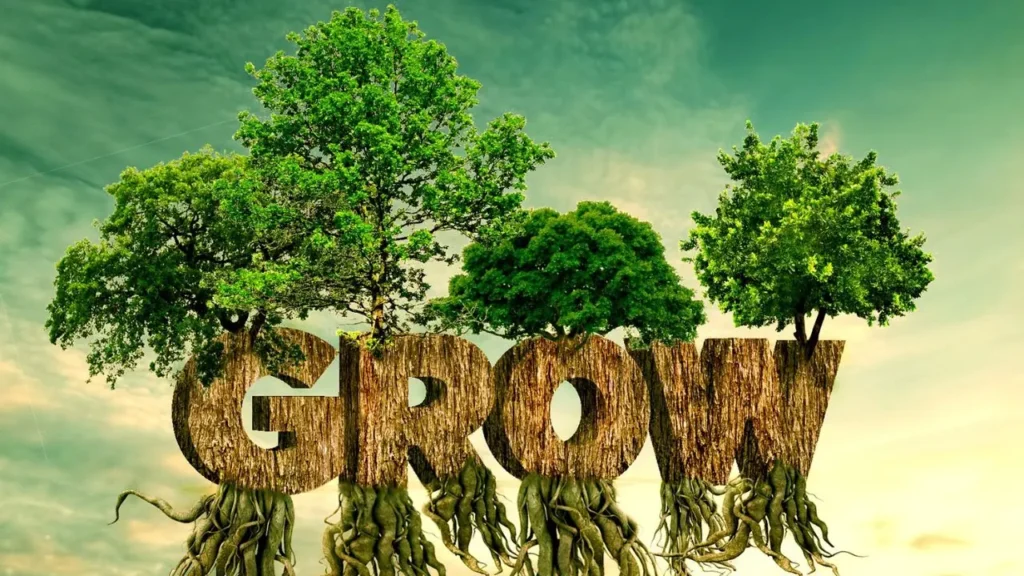
The pursuit of economic growth has always been a major concern for various societies. This interest in growth stems primarily from its role in the development of countries. It is often perceived as an indicator of economic well-being.
Thus, and despite the strong pressure that economic growth exerts on the environment, it is only through this growth that countries will be able to reduce poverty and improve environmental management.
In general, the question that arises is how environmental resources should be exploited in order to ensure ecologically sustainable economic growth.
I- Economic growth source of well-being
For a country to reach its desired level of economic growth, it must have the necessary resources such as energy and other natural resources.
To ensure sustainable economic development, these resources must be used in such a way as to guarantee a sufficient supply for both current and future generations.
Therefore, it is essential to protect the environment that contains these vital natural resources.
The goal is therefore not to limit growth but to make it environmentally sustainable.
It should be noted that more economic growth is clearly desirable in developing countries in order to improve the well-being of people who today live in absolute poverty.
Alongside the question of the drivers of economic growth, another concern has gradually taken an important place in the debate on growth.
This is the one concerning the environmental limits to growth. These limits relate to the impact of growth on the environment.
This is how environmental preservation raises the question of the viability of the development model of industrialized countries and its generalization on a global scale in a finite world.
Moreover, the relationship between growth and the environment was initially understood through the equation posed by Ehrlich :
I = P.A.T
Or :
I : measures the impact of human activity on the environment and ecosystems;
P : is the population size;
A : measures consumption per person;
T : is a technology-related factor that refers to the impact per unit of consumption.
Thus, from this perspective, the impact of human activity on the environment can increase as a result of :
- A population increase;
- An increase in consumption;
- The use of more polluting technologies.
Conversely, ways to reduce the footprint of human activity on the planet could be :
- A decline in population;
- A decrease in consumption per person;
- The use of less polluting technologies.
However, this equation obscures the driving forces behind these variables, in particular :
- Decision-making mechanisms;
- The dynamics of technological innovation;
- Structural changes;
- The role of public policies;
- The evolution of preferences.
Thus, to address this dilemma, public figures often invoke concepts such as eco-development, sustainable development, and green growth.
It should be noted that the debate on the link between growth and environmental protection has focused on the idea of the existence of a curve of Kuznets.
This curve links per capita income level and environmental pressure or natural environment quality.
It suggests that pressure increases with income, but only up to a certain point beyond which it decreases.
II- Reconciling economic growth and environmental preservation
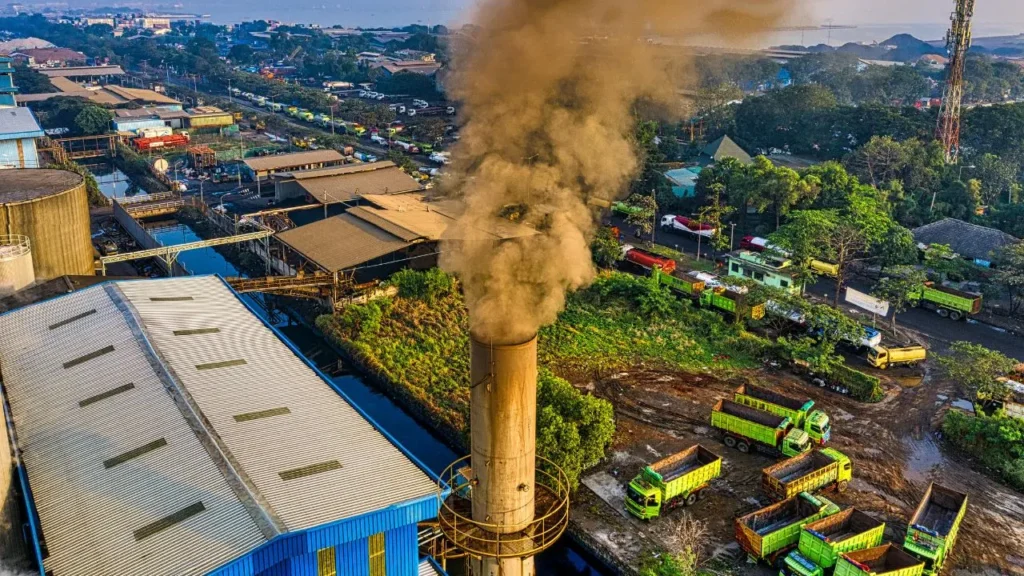
The threats to the environment relate not only to climate change, but also to the likely depletion of fossil fuels (especially oil) in the not-too-distant future.
These environmental problems will draw the attention of the international community to the limits of growth in a world with limited resources.
Indeed, economic growth has generally been accompanied by the depletion of significant renewable and non-renewable resources :
- Tropical forests are disappearing at a rapid rate;
- Nearly one billion people live in countries where usable water is insufficient and water supply sources continue to be overused and polluted;
- The impoverishment of biodiversity;
- Stocks of key mineral resources, such as aluminum and copper, are mostly not at risk of being depleted, but high-quality reserves are being depleted, and exploiting lower-quality reserves often results in high energy and environmental costs;
- Many fisheries around the world are in decline due to overfishing.
However, it is important to remember that renewable does not mean inexhaustible. For example, it is entirely possible to run out of fish if we catch them at a rate faster than they can reproduce.
Furthermore, unlike those opposed to growth, other schools of thought believe in the possibility of reconciling economic growth and environmental preservation.
This is how economists use certain arguments to defend the existence of a positive link between economic growth and the environment, which can be grouped around three factors :
1- When the standard of living reaches a certain threshold, citizens are increasingly willing to allocate a portion of their income to a better quality of the environment;
2- Economic growth stimulates a shift in the production structure towards less pollution-intensive sectors;
3- Economic development can promote a rise in the technological level in the country, these technological innovations are likely to promote an improvement in the quality of the environment.
Moreover, the pursuit of green growth requires changing not only the concept of the environment but also the way the economy functions.
It is only through the creation of a synergy between the economy and the environment that it will be possible to achieve this objective.
Thus, greening the growth of economic capital is a first step, but it is far from sufficient to preserve natural capital. It is not simply a matter of making our practices more sustainable, we must go deeper and question the very usefulness of some of our habits.
Furthermore, to correct the shortcomings of the current economic model, economists propose internalizing externalities. This internalization involves environmental regulation.
It should be noted that the term externality originates from the fact that pollution can affect the well-being of one or more individuals without them being associated in any way with the activity that is the source of this pollution.
This is why environmental regulation involves regulatory tools (prohibitions, standards, etc.) or economic tools (taxes, pollution permit markets, etc.).
In this context, the tax system proposed by Arthur Pigou makes it possible to internalize environmental externalities, that is to say that the State must impose a tax on the polluter equivalent to the marginal social cost of the activity at the basis of the pollution.
Conclusion
Environmental conservation and economic growth are important for human existence, which implies that to ensure sustainable economic growth, environmental resources must be used responsibly, as most of them are non-renewable and some of the consequences of environmental degradation are irreversible.
To achieve this, we must therefore move from a traditional growth model, which is detrimental to environmental sustainability and could be described as “growth first, cleanup later”, to a new model of ecologically sustainable economic growth that could be called “green growth”.