
Introduction
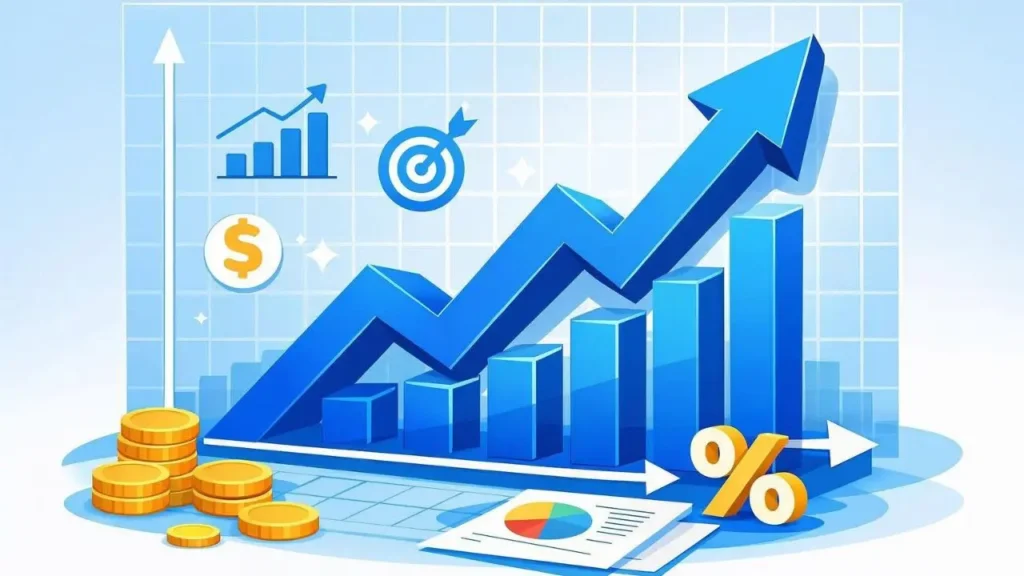
The pursuit of economic growth is a priority for every country, as it contributes to the creation of national wealth through the sustained increase in the production of goods and services. It is measured by GDP and it helps to improve living standards, reduce unemployment and fund public services.
However, the paradox is that this economic growth can be the source of inflation.
I – Mechanism of economic growth : When demand exceeds supply
1- Economic overheating
Economic overheating is a phenomenon that refers to a significant resurgence of inflation due to excessively strong economic growth.at some point, which is due to the excessively optimistic expectations of investors and entrepreneurs. In principle, economic growth is always accompanied by inflation.
Technically, an economy is considered overheated when a country’s real GDP exceeds its potential GDP. Therefore, if a country’s human and natural resources are exploited beyond their actual value, we can speak of economic overheating.
Thus, the term “economic overheating” is often used in financial jargon when referring to uncontrolled growth in economic activity, and economic growth inevitably leads to increased demand for goods and services. Because if supply is not adjusted to meet demand in a timely manner, prices typically begin to rise significantly.
This is how a positive spiral is born, with increased demand stimulating production and investment allowing more people to find work, which in turn stimulates demand.
In fact, overheating has a highly variable duration; it is the beginning of a long phase of slowdown in growth which will then intensify when the crisis erupts. This phase of economic growth logically precedes the recession phase in the business cycle.
The price increases that characterize economic overheating are systematically accompanied by intervention from the Central Bank which will then raise its interest rates in order to slow growth and contain or even reduce inflation.
In general, central banks are very attentive to any overheating and attempt, by raising the key interest rate which allows them to control the level of the money supply, to keep price increases under control, so that supply can adapt harmoniously to demand before the economic engine overheats.
It should not be forgotten that maintaining a very expansionary monetary policy at full employment causes the economy to overheat, insofar as the demand for goods and services is stimulated, which pushes companies to try to satisfy this additional demand, either by attracting new people to the labor market, or by increasing their productivity.
Generally, an overheated economy is characterized by :
A- Low interest rates
Generally, overheated economies form after a successful bull market, fueled by low interest rates. These rates encourage consumption, leading to excessive optimism among businesses and investors.
In principle, if interest rates are kept artificially low for a prolonged period, the risk of economic overheating is very likely to occur.
B- High housing prices
Real estate prices also reflect the economic situation. Thus, if there is excess money in circulation, people tend to invest it in fixed assets such as real estate.
When the money supply artificially increases over a long period, housing markets tend to overheat. This means that housing prices rise far beyond the means of the average citizen.
Furthermore, housing affordability is defined as the ratio between housing prices and median income. Therefore, low housing affordability means that housing prices rise unilaterally without a corresponding increase in income.
C- Household debt
In principle, the production of many goods and services requires their consumption. Therefore, in times of economic overheating, many people borrow to finance discretionary purchases. This is why an increase in household debt is a clear sign of an overheated economy.
It should be noted that there is a direct correlation between the level of household debt and the irrational exuberance caused by a lack of prudence and mismanagement.
In general, economic overheating is a long-term process, which does not happen overnight, but is due to inappropriate economic policies maintained over long periods.
2- Full employment and upward pressure on wages
In general, to achieve a balance between labor supply and demand, it is necessary to modify wages so that the adjustment can take place.
However, the supply and demand for labor are not defined as functions of wages alone, but in relation to a large number of variables.
Indeed, various sources of friction prevent this balance, for example :
- The mismatch between training programs and the needs of certain companies;
- Recruitment difficulties in traditional sectors due to the lack of attractiveness and appreciation of certain professions;
- The desertion of employees put off by the constraints inherent in certain sectors, such as catering;
- The after-effects of the Covid-19 crisis are preventing companies from offering attractive compensation to attract new talent.
Finally, the goal of full employment risks being hampered by the prospect of slower growth and by the fight against inflation, which ultimately impacts the balance of the labor market. Thus, curbing price increases could lead to a resurgence of unemployment.
It should be noted that the equilibrium in the labor market is expressed by the following equation :
Offer of available labor force = Demand for productive labor
Furthermore, the supply of available labor depends on :
- Labor force,
- Real wage rate,
- Volume of actual investment.
While the demand for productive labor is a function of :
- Actual investment volume,
- Real wage rate,
- Manufacturing coefficients.
Generally, one of the main ingredients of price stability is a healthy labor market, that is, a market that allows people to get the job they want, employers to have the workforce they need, and real wages to grow in line with productivity.
Thus, the maximum sustainable level of employment is the highest level of employment that can be achieved in the economy without causing inflationary pressures.
Furthermore, to assess the impact of wage growth on labor costs and inflation, it is important to first consider the gains related to productivity improvements. Indeed, productivity gains help to keep both unit labor costs and inflationary pressures stable despite wage increases.
If wages remain stable while workers’ marginal productivity falls, the unit production cost of firms will increase and their margin will decrease, which will push firms to hire less or even resort to layoffs.
Likewise, in the event of labor demand being lower than labor supply, a decrease in the real wage rate leads to a decrease in the labor supply, since some no longer wish to have a job paid at a level they consider too low for them and leave the labor market, especially since the economy offers jobs to those who are able and willing to work.
In this context, and according to Keynes, cyclical unemployment can arise when nominal wages are rigid. This cyclical unemployment can be absorbed once real wages have adjusted. Since this adjustment can be lengthy, government intervention is necessary.
3- Consumption financed by credit
The development of the consumer credit market fulfills a range of social and economic functions. However, it contributes to generating a phenomenon of over-indebtedness which, in turn, is a source of social exclusion.
Consumer credit is a contract by which a lender (a financial institution) makes available to a borrower, directly or through a merchant, a sum of money which must be repaid plus interest in installments over time.
Its purpose is to finance everyday living expenses and household equipment, excluding real estate. It is intended to finance private needs unrelated to the borrower’s professional activity.
Credit allows you to avoid immediately committing the necessary funds for a planned purchase, either the borrower does not have sufficient liquidity, or they have it but wish to keep it.
It has an economic impact firstly, as it can help stimulate and increase the solvency of aggregate demand in order to develop investment and growth. It also has a social impact, as it can provide assistance to the middle class and economically disadvantaged social groups to help them access certain goods or services.
It should be noted that there are two main categories of consumer credit:
A- Designated consumer loans
Designated consumer loans are loans linked to a purchase, such as for example the purchase of a specific item at the time the contract is signed (car, household appliances, travel, etc.). In this case, the loan obtained must be used solely to pay for the item in question..
B- Unallocated consumer loans
Unallocated consumer loans are loans that are not tied to a specific purchase.the borrowerHe then has free access to the borrowed amount, which hehas the option to use the borrowed sum as he wishes, whether to purchase consumer goods or any other service. Hethese are the personal loans, revolving credit, leases with purchase option and overdrafts in authorized accounts.
Thus, credit allows low-income households, who do not have sufficient liquidity, to anticipate income not yet earned, by having purchasing power to obtain goods and services that may be essential, thereby spreading their expenses over time.
Finally, while access to credit is primarily analyzed as a means of access to consumption for social categories that cannot accumulate sufficient prior savings, it is obviously important not to lose sight of the fact that by contributing to raising the level of demand, credit generates inflationary pressures insofar as the purchasing power thus acquired by the borrower is not obtained in return for his contribution to the creation of national wealth in the present but rather for work that will be done in the future, which translates into an increase in demand relative to the existing supply.
II- Link between economic growth and inflation
1- Temporary shortages of raw materials
Beyond the very general idea that commodity prices follow a periodic trajectory of more or less variable frequency, there does not seem to be a precise and unanimously recognized definition of a cycle in the field of commodity economics.
From this perspective, it is probably necessary to distinguish between a “cycle” and a “supercycle,” with the duration of the upward phase serving as the classification criterion. A supercycle would be characterized by an increase over one or more decades (ten to thirty-five years) in the real price of commodities, fueled by demand factors, notably the urbanization and industrialization of a large economy, followed by a period of depression.
It is generally accepted that the supply of non-renewable resources is relatively inelastic in the short term, but this is not the case in the long term. The reason is simple: the supply from the extractive sectors exceeds the “simple” problem of resource availability, geological to depend, also, on technological, (geo) political, legal as well as economic and financial factors.
It should be noted that rising prices encourage both the exploitation of mines with lower ore grades and the development of new technologies, as well as exploratory investment. This increases the supply’s capacity to meet the increased demand.
For example, after the disruption caused by the Covid-19 health and economic crisis, the building and construction sector is recovering but is experiencing an unprecedented shortage of raw materials. This is a consequence of the crisis, but also of the large-scale purchase of materials by China and the United States, which is leading to a worrying surge in material prices, because shortages generally translate into soaring prices.
In the same way that an ordinary market operates with the confrontation of supply and demand which determines the price of each good, there is also a raw materials market which operates in a specific way because of the particular nature of raw materials.
The distinctive feature of mineral raw materials lies in their non-renewable nature. This means that consuming a unit of a resource today means that it will be impossible to extract and consume that same unit later. Therefore, there is a loss of future income generated by each unit extracted today. This scarcity increases as the resource is exploited.
Furthermore, price fluctuations depend not only on supply and demand in the international market, but also on investments, changes in production capacity, and the raw materials economy.
The persistent rise in demand is due to global population growth, changing diets, the surge in effective demand from emerging countries that has not been met by a corresponding increase in supply, and the widespread adoption of resource-intensive lifestyles.
In principle, since consumer goods are manufactured from raw materials, an increase in their price has a direct impact on companies’ margins.
To combat supply difficulties, companies can :
- Store by mobilizing their cash flow to build up stock and thus anticipate tensions;
- Raise prices and inform its customers of the impact of the supply shortage;
- Working together with industrialists and make use of the remaining materials;
- Eco-design to be less dependent on raw materials.
In this regard, and for “sustainable” management of raw materials, we need to make the economy “circular” more quickly in order to slow down the depletion of resources, by recycling most of the materials discarded in waste while slowing down the depletion of resources.
Indeed, the issue of recycling is crucial, provided that manufacturers assemble easily separable and identifiable components, hence the extensive work in research and development with upstream and downstream stakeholders in connection with technical research and innovation centers.
2- Massive investments that drive prices up
Generally, when demand for products or services increases but supply fails to adapt this increased demand is driving prices up.
In response, companies implement investment programs to increase their production and hire new employees, which further stimulates economic activity and aggregate household demand, and as long as the quantities produced fail to meet aggregate demand, the process of rising prices continues.
However, in the context of an exit from a gloomy or depressed economic situation, companies do not react immediately to an increase in demand for their products because they seek to sell off their stocks and prefer to have confirmation of the sustainable nature of the recovery before investing.
Generally, we can cite certain mechanisms by which investment can cause inflation :
A- Demand-pull inflation (Excess demand)
a- Stimulation of activity
Companies invest (new machines, hiring) to increase their production, just as public investments inject money into the economy, which increases household income and purchasing power, resulting in increased demand.
This is how companies invest to meet this demand, hire more, which further increases demand and wages, thus continuing the inflationary cycle.
b- Supply/Demand Imbalance
If aggregate demand (consumption + investment) increases faster than production capacity, companies raise their prices because supply cannot quickly keep up with the increase in demand, thus creating a general rise in prices.
B- Cost-push inflation (Cost pressures)
a- Raw materials
Massive investments in resource-intensive sectors (energy, metals) can drive up their prices, increasing production costs for all companies.
b- Salaries
To finance investments and meet strong demand, companies may need to raise wages. If this increase is not offset by a rise in productivity, the unit cost of goods increases, leading to higher final prices.
C- Excess money supply
Investments financed by excessive money creation (by central banks) can flood the market with money, creating a situation where “too much money chases too few goods”, pushing prices up.
Conclusion
Although one of the major constraints to economic growth is inflation, however, its control by the Central Bank at a low, stable and predictable level allows the population to spend and invest with confidence, reduces uncertainty and encourages long-term investments.
It also supports sustained job creation and increased productivity, which translates into an improved standard of living.
**aquasculpt**
aquasculpt is a premium metabolism-support supplement thoughtfully developed to help promote efficient fat utilization and steadier daily energy.
**herpafend official**
Herpafend is a natural wellness formula developed for individuals experiencing symptoms related to the herpes simplex virus. It is designed to help reduce the intensity and frequency of flare-ups while supporting the bodys immune defenses.
**mounja boost**
MounjaBoost is a next-generation, plant-based supplement created to support metabolic activity, encourage natural fat utilization, and elevate daily energywithout extreme dieting or exhausting workout routines.
**prodentim**
ProDentim is a distinctive oral-care formula that pairs targeted probiotics with plant-based ingredients to encourage strong teeth, comfortable gums, and reliably fresh breath
**men balance pro**
MEN Balance Pro is a high-quality dietary supplement developed with research-informed support to help men maintain healthy prostate function.
**prostafense official**
ProstAfense is a premium, doctor-crafted supplement formulated to maintain optimal prostate function, enhance urinary performance, and support overall male wellness.
**neurosharp official**
Neuro Sharp is an advanced cognitive support formula designed to help you stay mentally sharp, focused, and confident throughout your day.
**boostaro official**
Boostaro is a purpose-built wellness formula created for men who want to strengthen vitality, confidence, and everyday performance.
**backbiome**
Mitolyn is a carefully developed, plant-based formula created to help support metabolic efficiency and encourage healthy, lasting weight management.