
Introduction
The current conflict regarding the war against Iran serves as a reminder of the extent to which the global economy remains dependent on the geography of energy.
While the magnitude of the shock will depend on the duration of hostilities and the evolving situation in the Strait of Hormuz, historical precedents show that the consequences can be considerable, both for prices and for global economic growth.
I – Why does a conflict with Iran worry the global economy?
1 – Iran’s strategic role in the Middle East
Since the 1979 Islamic Revolution, Iran has established itself as a central player in the geopolitical dynamics of the Middle East.
By adopting a strategy based on supporting armed factions and militias, Tehran has extended its influence in key countries such as Iraq, Syria, Lebanon, and Yemen.
The war against Iran triggered on February 28, 2026 by the offensive Israeli-American against the Iran has opened a new phase in the history of relations between the Islamic Republic and its neighbors.
Beijing, the main buyer of Iranian oil, is now exerting increasing pressure to avoid any lasting disruption to global energy flows.
Note that Iran is among the world’s top ten oil producers, although its production has declined significantly since the 1970s, before the fall of the Shah and the imposition of US sanctions.
According to the Organization of the Petroleum Exporting Countries (OPEC), Iran produces today approximately 3.2 million barrels per day (bpd) with an industry in much better condition than that of Venezuela, another country that has suffered years of US sanctions.
Iran also has the world’s third largest crude oil reserves, making it a strategic player in the long term.
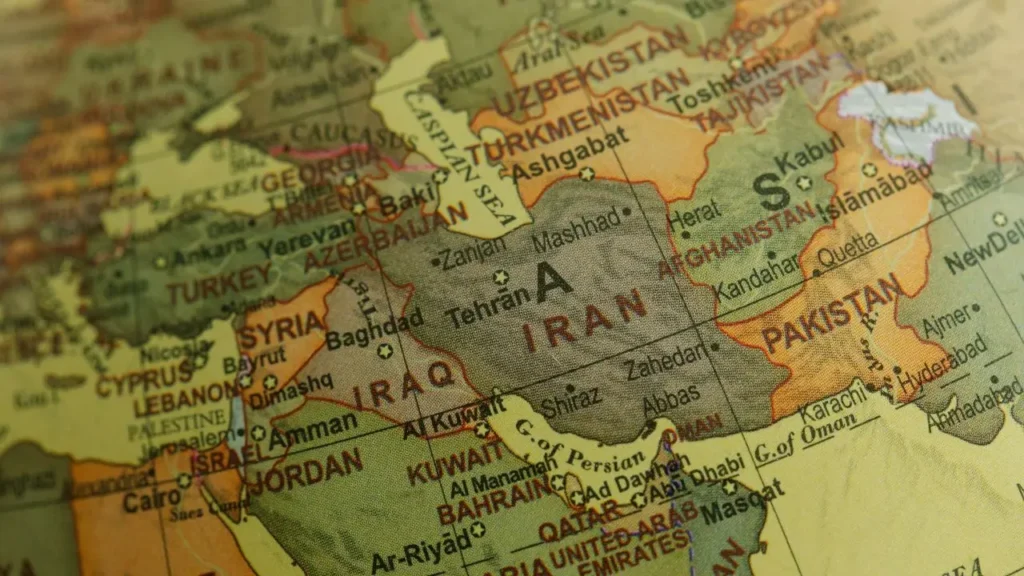
2 – The Strait of Hormuz, a vital route for global trade
The deteriorating situation around the Strait of Hormuz heightens concerns about security of oil supply and uncertainty about market prospects.
Presented as a major strategic asset, the disruption of maritime traffic in the Strait of Hormuz recalls Iran’s central role in global energy security, but simultaneously exposes it to the hostility of its main trading partners and the international community.
Long considered the Islamic Republic’s ultimate weapon, the Strait of Hormuz now appears as much a symbol of power as a revealer of vulnerability.
Threatening to close it allows Tehran to reiterate its strategic importance. But this strategy faces opposition from China, India, the Gulf monarchies, and Western economies, all dependent on the free flow of hydrocarbons.
Since the start of the second war against Iran in less than a year, Tehran’s strategy of precipitating a rise in world oil prices by blocking the Strait of Hormuz and disrupting supply chains has evaded the question of the possible consequences of the conflict not only on the price of oil but rather on international trade.
3 – Oil and gas exports at the heart of tensions
The very close relationship between energy and geopolitics is well known. This also applies to several armed conflicts. But, in recent times, the conflict most closely linked to energy is the 2026 war against Iran.
The Iranians’ strategy was to ignite the entire Middle East, block the Strait of Hormuz for several weeks (for the first time in history), and target the energy facilities of the Arab Gulf countries, particularly oil and natural gas.
Iran has targeted and damaged oil fields, oil processing plants, pipelines, refineries, oil and refined product export terminals, and liquefied natural gas (LNG) production units, not to mention oil tankers and gas carriers.
As for the blockade of Hormuz, it has obviously caused a surge in crude oil prices, refined products and natural gas and a sharp drop in oil and gas exports from the Middle East, as well as generating the risk of a global oil and gas shortage, which translates into global inflation and an unprecedented geopolitical crisis, especially since the Strait of Hormuz is a strategic passage through which almost a fifth of the world’s oil and liquefied natural gas flows pass.
Therefore, to bypass the Strait of Hormuz, the Arab Gulf states should seek to create new export routes. Thus, the UAE had already begun constructing a second export pipeline terminating, like the first, in Fujairah, outside the strait.
II – What impact on oil and energy prices ?
1 – Why oil markets react immediately
Generally, under normal circumstances nearly 20% of global oil and natural gas trade passes through the Strait of Hormuz.
Therefore, any obstruction of this strategic waterway could reignite tensions in international energy markets.
Faced with this situation, the major powers, namely the G7 countries, are considering a coordinated response materialized by the release of strategic oil reserves.
The operation would be carried out in coordination with the International Energy Agency (IEA), which oversees a collective emergency system designed to stabilize markets in the event of a crisis.
2 – The consequences of a sustained rise in the price of a barrel of oil
Since the war against Iran in late February 2026, energy markets have been in turmoil.
Despite the memorandum of understanding between the United States and Iran promised a genuine series of appeasement measures, an immediate and permanent cessation of hostilities, the gradual lifting of the American naval blockade, the reopening of the Strait of Hormuz and the resumption of Iranian oil exports.
However, the failure of talks between Washington and Tehran has taken the international community by surprise, given that oil market rebounded following renewed tensions in the Middle East, marked by war against Iran and Tehran’s announcement of continued closure of the Strait of Hormuz.
Moreover, since the oil market is global, a crisis in a strategic area like the Strait of Hormuz is enough to drive up international prices. The impact could be terrible because the market is globalized.
However, it is on the price front that the effects of the war against Iran are felt most severely. Global inflation is expected to accelerate from 2.9% in 2025 to 3.6% this year.
In the United States, it reached 4.2% in May and could rise above the target of the Fed for the seventh consecutive year.
It should be noted that a sustained increase in the price of a barrel of oil would eventually have a gradual impact on household purchasing power, particularly through fuel and heating.
Whereas for investors, the rise in prices benefits oil and oil-related stocks, while weakening sectors sensitive to energy costs such as transport, chemicals, and heavy industry.
3 – Countries most dependent on energy imports
Disruptions to tanker traffic and security risks have slowed maritime transport operations, increasing uncertainty. Asian countries appear particularly vulnerable to these disruptions due to their heavy reliance on Middle Eastern crude oil.
While they are heavily dependent on oil transiting through the Strait of Hormuz, Asian countries that import 95% of their oil from the Middle East must find new energy sources. Most, like Japan, are turning to their coal-fired power plants, even the most polluting ones.
Indeed, the war against Iran is disrupting lives and livelihoods in the region and beyond. It is also darkening the outlook for many countries whose economies were just beginning to show signs of sustained recovery after past crises.
This shock is global, but asymmetrical. Energy-importing countries are more exposed than exporters, poor countries are more exposed than rich ones, and those with limited room for maneuver are more exposed than those with abundant reserves.
This shock is global, but asymmetrical. Energy-importing countries are more exposed than exporters, poor countries are more exposed than rich ones, and those with limited room for maneuver are more exposed than those with abundant reserves.
Energy-importing countries in Africa, the Middle East and Latin America, whose budgetary space and external reserves were already limited, are also suffering from the increased burden of import bills.
In major Asian manufacturing countries, rising fuel and electricity prices are increasing production costs and reducing household purchasing power.
III – The effects on global economic growth
War against Iran disrupts not only oil and gas, but also petrochemicals, sulfur, fertilizers, helium production, and aluminum production.
The closure of the Strait of Hormuz has once again interrupted the global supply chains, as had already happened with the Covid-19 pandemic, but this time with an even wider reach.
1 – Inflation fueled by rising energy costs
The looming threat of an energy shock is emerging, with the risk of triggering so-called ‘stagflationary’ effects (a combination of inflation and economic stagnation).
What initially appears to be an energy crisis concerning liquefied gas seems to be evolving into a more global problem. Indeed, inflation could increase significantly and hinder economic growth.
The extent of the impact and the implications for inflation in the medium term depend on the scope and duration of the conflict.
While rising energy prices initially affect motorists at the pump and household gas bills, their effects do not stop there.
Energy is a fundamental input in the production of almost all goods and services. When the price of oil or gas increases, the cost of production rises for industrial companies, transporters, farmers, and electricity producers.
These additional costs are then passed on, after a certain delay, to consumer prices. This transmission is all the more powerful when the shock is prolonged and inflation expectations are not firmly established.
If high energy and food prices persist, they will fuel inflation globally.
In most of Asia and parts of Latin America, where inflation had remained relatively low, rising energy and food costs will test the resilience of expectations, particularly in countries with weaker currencies that import a lot of energy.
In Europe, a new surge in energy-driven prices would compound the difficulties related to the cost of living, increasing the risk of wage demands becoming more persistent.
In low-income countries, where people spend a large portion of their resources on food, particularly in Africa and parts of the Middle East, as well as in Central America, rising food prices would have serious economic and social consequences.
2 – Forecasts from international economic institutions
War against Iran could shape the future of the global economy in different ways, but all scenarios result in higher prices and slower growth.
A short-term conflict could cause oil and gas prices to surge before markets adjust, while a prolongation of hostilities could keep energy prices high and put a strain on import-dependent countries.
Or the world could find itself in a hybrid situation marked by persistent tensions, still expensive energy and inflation that is difficult to control, in a context that remains marked by uncertainty and geopolitical risks.
According to the IMF, the economic repercussions of the war are both global and highly uneven.
They help to understand why the same shock can result, for some countries, in exceptional gains due to improved terms of trade, for others in balance of payments difficulties, and in many cases, in a further rise in the cost of living.
The IMF has revised its growth outlook downwards and does not rule out a widespread recession in the event of a prolonged conflict.
The International Energy Agency (IEA), which includes 32 countries, has announced a very strong mobilization of its strategic oil reserves.
This unprecedented mobilization of strategic reserves was not enough to quell the frenzy in the global oil market, but it is clear that the market situation would have been significantly more strained without this massive recourse to these strategic reserves.
Conclusion
The Middle East controls almost 50% of the world’s proven oil reserves and 40% of its proven natural gas reserves.
This is one of the reasons why the war against Iran waged by the United States and Israel is causing a major shock to global energy markets, leading to a surge in oil prices.
This dramatic increase is explained by growing concerns about global supply, as several major producers have reduced their deliveries and military tensions threaten strategic shipping routes.